


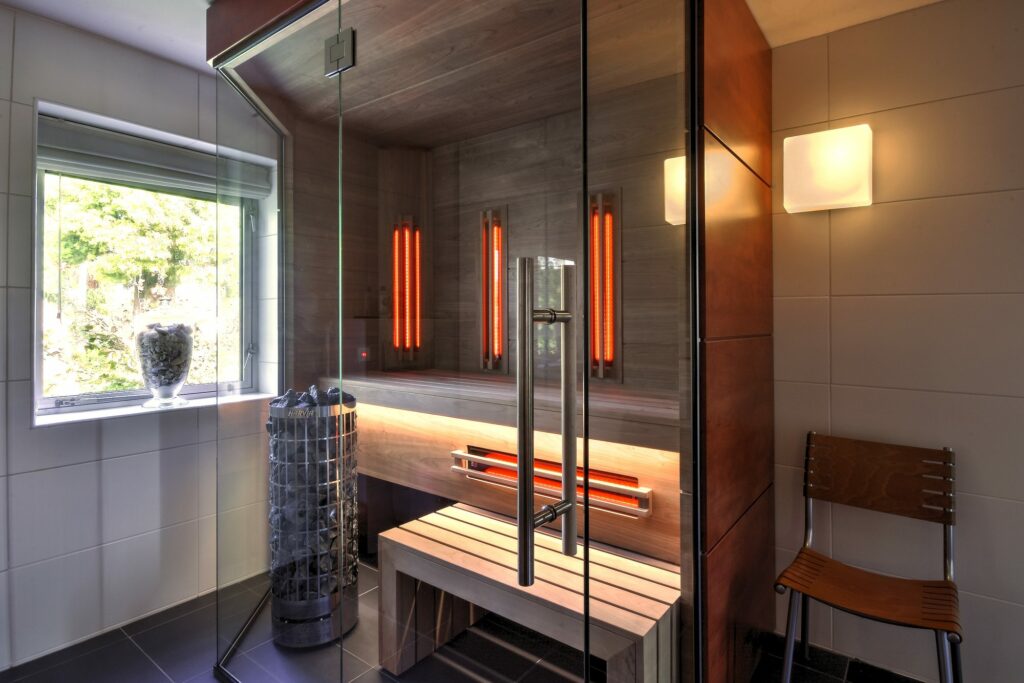
A traditional sauna intensely heats the air and the cabin environment using a heater. Infrared saunas combine a more moderate ambient temperature with heat transmitted to the body through radiation. They are therefore two different thermal experiences.
The time it takes to heat up depends on the heater's power, the cabin's volume, its insulation, and the desired temperature. Unlike an infrared cabin used on demand, a traditional sauna generally requires a warm-up phase before use.
With Infracab'in Direct Heat® technology, radiant heat is available quickly after the emitters are switched on. There is no need to wait for the entire cabin air to reach a high temperature before starting the experience.
Yes. Ventilation contributes to air renewal, user comfort, and the proper functioning of the system. Its sizing and placement must be considered in relation to the cabin, the stove, the room, and applicable technical requirements.
An Infracab'in infrared cabin does not require a water supply to operate. A traditional sauna can also function without a direct water supply to the cabin, although water can be used occasionally on the stones when the heater and usage conditions allow.
Yes. Infracab'in offers combined configurations that integrate a traditional sauna with infrared technology in the same space. This allows both experiences to be offered without requiring multiple pieces of equipment or dedicated areas.
There is no universal order applicable to all users. The sequence depends on the desired experience, the duration of the sessions, and individual heat tolerance. In a professional setting, it is best to define a usage protocol adapted to the location and its clientele.
Energy consumption depends on the equipment's power, size, usage time, and operating frequency. An infrared cabin typically operates with lower installed power and doesn't require the same initial heating time as a traditional sauna. Therefore, in many configurations, it can be significantly more energy-efficient.