


How does an infrared cabin work? Unlike a traditional sauna, which primarily heats the ambient air, an infrared cabin uses radiation to directly transmit some of the heat to exposed surfaces.
IR-A, IR-B, IR-C, types of emitters, operation, precautions for use: discover the essential principles to understand infrared technology and Infracab'in's technological choices.
Infrared radiation is part of our everyday environment. Invisible to the naked eye, it contributes in particular to the sensation of heat felt when we are exposed to the sun or near a heat source.
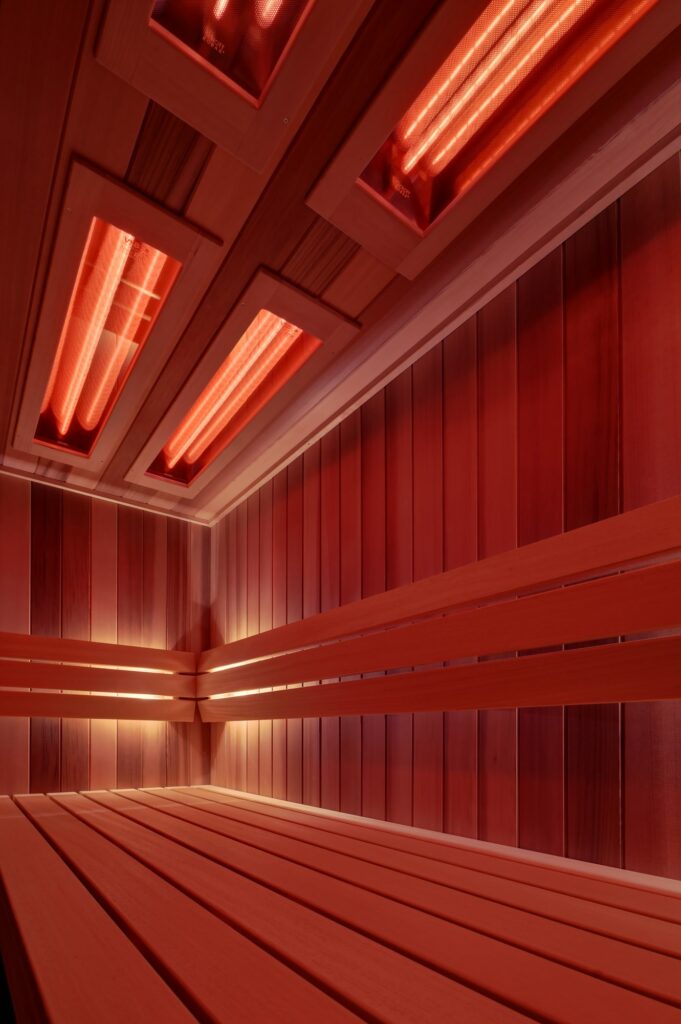
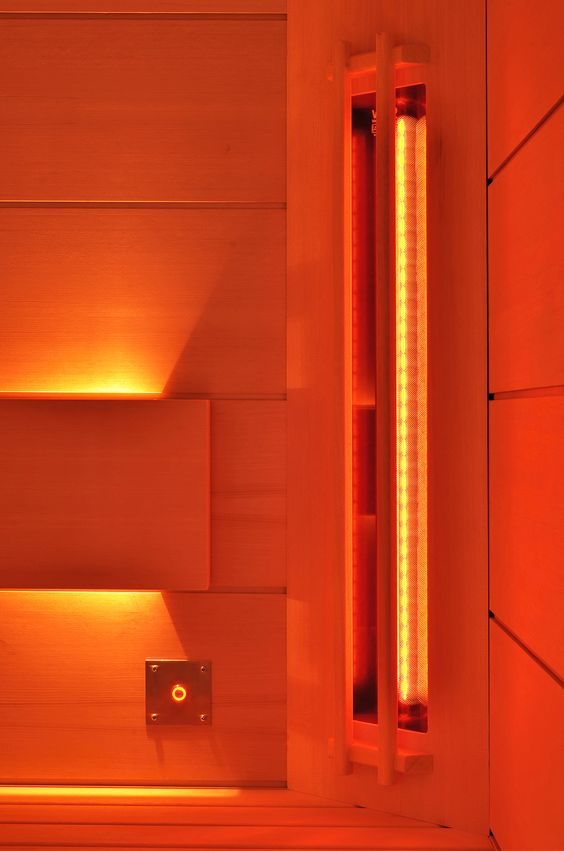
Infrared radiation covers a wide range of wavelengths, traditionally divided into three bands: IR-A (near infrared), IR-B (mid-infrared) and IR-C (far infrared).
Their interaction with tissues differs, notably according to their wavelength. IR-A has a greater capacity for skin penetration than higher infrared wavelengths, which are absorbed more in the superficial layers.
The Chaleur Directe® emitters selected by Infracab'in combine the three IR-A, IR-B and IR-C bands, in order to offer broad spectrum infrared exposure.
An infrared cabin is not defined solely by its temperature. The technology of the emitters also determines the infrared spectrum delivered, how the heat is transmitted, and the overall experience.
Depending on their design and characteristics, emitters can produce different spectral distributions.
Infracab'in has chosen broad spectrum emitters combining IR-A, IR-B and IR-C, positioned around the body to prioritize direct and controlled exposure.
This approach forms the basis of our Direct Heat® technology: transmitting heat by radiation to exposed areas rather than solely seeking to raise the ambient air temperature.
Infrared is an electromagnetic radiation invisible to the naked eye, naturally present in our environment. It contributes in particular to the sensation of heat felt when we are exposed to the sun or near a heat source.
In an infrared cabin, this radiation is used to directly transmit some of the heat to the exposed surfaces, unlike a traditional sauna which mainly heats the ambient air.
An infrared cabin uses infrared emitters that transmit energy in the form of radiation. This is absorbed by the exposed surfaces and converted into heat.
This direct transmission allows for the creation of a progressive sensation of warmth in a more moderate thermal environment than that of a traditional sauna.
The technology of the transmitters, their power, their spectrum and their positioning play an important role in the experience obtained.
The main difference lies in the way heat is transmitted.
The traditional sauna heats the air in the cabin intensely, which then transmits its heat to the body mainly by convection.
The infrared cabin primarily uses radiation: some of the heat is transmitted directly to the exposed surfaces. It can therefore operate at a generally more moderate ambient temperature.
Infrared radiation is generally divided into three bands:
These different wavelengths do not interact with tissues in the same way. In particular, IR-A has a greater capacity to penetrate the skin than higher infrared wavelengths, which are absorbed more in the superficial layers.
Infracab'in Direct Heat® emitters combine the three bands IR-A, IR-B and IR-C.
Not all infrared emitter technologies produce the same spectrum.
Carbon panels are generally used to produce primarily far-infrared, while broadband emitters can combine IR-A, IR-B and IR-C.
Infracab'in has chosen broad spectrum emitters for its Direct Heat® technology, with a positioning studied around the body to promote direct exposure of different areas.
Yes, but that's not its primary function.
Unlike a traditional sauna, which relies heavily on heating the air, an infrared cabin uses radiation to directly transmit some of the heat to the exposed surfaces.
The cabin air also gradually warms up, but the experience is not solely based on a high ambient temperature.
An infrared cabin generally operates at a more moderate ambient temperature than a traditional sauna, from about 35 to 50 °C depending on the use and configuration.
At Infracab'in, the operating conditions are adapted to the cabin's configuration, the intended use, and the users. The goal is not simply to reach a high temperature, but to create a comfortable and controlled exposure to radiation.
With Infracab'in Direct Heat® technology, the radiation is noticeable quickly after the emitters are switched on.
Therefore, it is not necessary to wait for the entire volume of air to reach a high temperature as in a traditional sauna. Depending on the intended use and desired comfort, the session can begin quickly after switching on.
The duration of a session depends on the intended use, the equipment settings, and individual heat tolerance.
It is important to follow the recommendations for using the cabin, to pay attention to your sensations and to maintain adequate hydration.
In case of discomfort, dizziness, nausea, weakness or unusual discomfort, the session should be interrupted.
No. Infracab'in solutions are intended for well-being, comfort, and recovery. They are not medical devices and are not intended to diagnose, treat, care for, or cure any disease.
In case of known pathology, ongoing medical treatment, pregnancy, particular sensitivity to heat or doubt concerning the use of infrared, it is recommended to seek advice from a doctor or healthcare professional before use.
During the session, it is important to follow the equipment recommendations, pay attention to your sensations, and ensure adequate hydration.
Direct Heat® is the technological approach developed by Infracab'in around broad spectrum infrared emitters combining IR-A, IR-B and IR-C.
The emitters are positioned around the body to expose different areas and transmit heat mainly by radiation, in a moderate thermal environment.
The design of an Infracab'in booth is not based solely on the transmitters: their number, power, positioning, the ergonomics of the booth and its integration into the location are studied according to the project and its use.
Infracab'in solutions are designed for well-being and comfort. They are not medical devices and are not intended to diagnose, treat, cure, or treat any disease.
The information presented on this site is for informational purposes only and is not a substitute for medical advice, diagnosis, or treatment. If you have a medical condition, are undergoing medical treatment, are pregnant, or have any doubts about the use of heat or infrared, consult a healthcare professional before use.